H-E-E-A-T: The New 5-Pillar Architecture of Google Ranking Algorithm

TL;DR
Move over E-E-A-T. There's a new standard in town. Discover why "Helpfulness" is the missing link in your SEO strategy and how H-E-E-A-T is rewriting the rules of the SERPs.
Table of Contents
In the high-stakes world of modern search, standing still is a slow extinction. For years, SEO teams optimized for E-E-A-T (Experience, Expertise, Authoritativeness, Trustworthiness). But recent Google core updates reveal an implicit evolution of that model—one that elevates a new primary signal: Helpfulness.
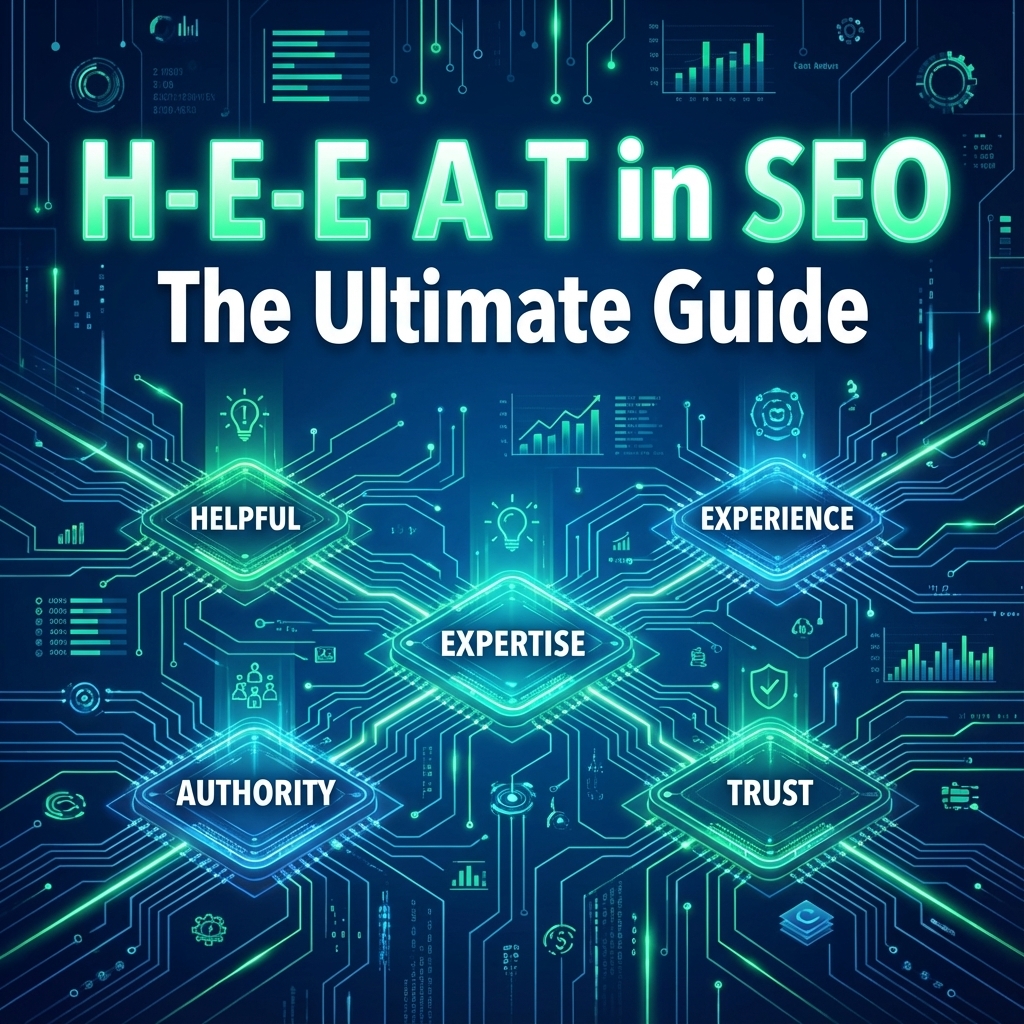
This shift is best understood as an expanded framework: H-E-E-A-T.
The Missing Variable: Why E-E-A-T Alone No Longer Wins
Google’s Helpful Content system was not a minor adjustment—it fundamentally changed how content is evaluated. Pages now compete not only on credibility, but on whether they genuinely satisfy user intent without friction, padding, or dependency on follow-up searches.
Across post-update case studies and ranking volatility, one pattern is consistent: sites that lost visibility were often authoritative—but inefficient. They answered questions without solving problems.
The pages that gained ground did something different. They delivered immediate value. They anticipated next steps. They reduced effort. This fusion of Helpfulness + E-E-A-T is what we define as the H-E-E-A-T Framework.
Decoding H-E-E-A-T: The Five Pillars
H — Helpful
Does the content fully satisfy the user’s intent without forcing them back to search results? High-H content is task-oriented, actionable, and optimized for time-to-value.
E — Experience
Demonstrated first-hand involvement. Screenshots, workflows, real outputs, or lived usage—not abstract commentary.
E — Expertise
Depth and accuracy. Content should reflect genuine subject-matter competence, not surface-level aggregation.
A — Authoritativeness
External validation. Citations, references, mentions, and links from trusted sources within the same topical ecosystem.
T — Trustworthiness
Transparency and reliability. HTTPS, accurate claims, clear ownership, and accessible contact information form the non-negotiable base.
Engineering Helpfulness into Your Stack
Helpfulness is not subjective—it is observable. It shows up in engagement, completion, and reduced pogo-sticking. Practically, it means minimizing friction between intent and outcome.
- Frontend Velocity: Performance is usability. Slow pages actively degrade helpfulness. Optimize Core Web Vitals.
- Structured Context: Schema clarifies meaning. Validate with our Structured Data Checker.
- Proof of Experience: Replace stock visuals with original screenshots and outputs.
The Semantic Advantage
With models like BERT and MUM, Google evaluates semantic depth—not just keywords. Content written to fill space is detectable. Every sentence must earn its position.
SEO is no longer about optimizing for a crawler.
It is about proving—decisively—that your page is the best possible answer for a real human.
Future-Proofing with H-E-E-A-T
As Search Generative Experience (SGE) expands, generic content becomes interchangeable. What remains defensible is experience-driven usefulness—content AI can reference, but not replace.
Your long-term advantage is not scale. It is clarity, proof, and helpfulness—validated through the discipline of H-E-E-A-T.
Audit Your H-E-E-A-T Foundation
Assumptions don’t rank. Measurement does. Verify performance, structure, and trust signals with Cubbbix Tools.

Was this article helpful?
Comments
Loading comments...