What Happened to the Amazon Data Centre UAE? AWS Outage Explained and Alternatives

TL;DR
A massive fire at an Amazon data centre UAE has caused widespread AWS outages, taking down services like the ADCB app. Learn what happened and discover tech alternatives.
Table of Contents
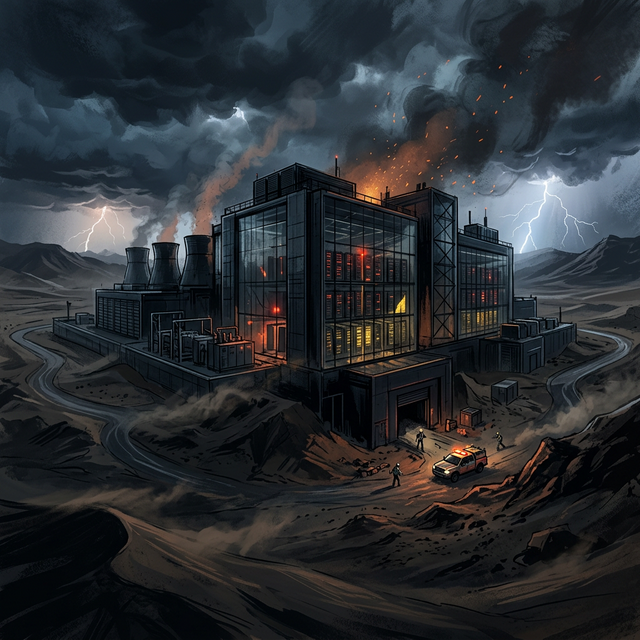
On Sunday, March 1, 2026, the technology landscape in the Middle East experienced a massive shock when an Amazon data centre UAE facility suffered a severe incident. Reports indicate that "objects" struck the AWS data centre UAE, sparking a significant fire and causing immediate power loss to one of its Availability Zones (mec1-az2) within the ME-CENTRAL-1 Region. To contain the blaze, emergency services were forced to cut power to the entire facility, leading to widespread disruptions.
If you're wondering why services are down or why the ADCB app not working error is appearing on your phone, this AWS outage is the primary culprit.
The Extent of the AWS Outage
The destruction at the Amazon data center UAE location has caused a domino effect across the region's digital infrastructure. Because so many local businesses rely on AWS, the sudden loss of computing power, including Amazon EC2, S3, and Relational Database Service (RDS), brought many operations to a standstill.
One of the most notable impacts has been felt by banking customers. Many users reported that their mobile banking was inaccessible, searching frantically for answers as to why the ADCB app not working message kept popping up. ADCB bank (Abu Dhabi Commercial Bank), like many modern financial institutions, relies on robust cloud infrastructure. When a major Amazon data center goes offline, the interconnected services—from authentication to transaction processing—can experience severe bottlenecks or total failure.
Although Amazon has not officially confirmed whether the incident at the AWS UAE facility was directly tied to the recent regional military tensions, the timing has drawn massive speculation. Regardless of the cause, AWS engineers warned that full recovery would take "many hours" or "at least a day" as they work to rebuild power systems and cooling infrastructure.
What Are the Alternatives?
When an Amazon data center Dubai or UAE region goes down, it highlights the critical risk of single-region reliance. For businesses affected by the AWS data centre UAE outage, here are the immediate and long-term alternatives:
1. Multi-Region Failover Architecture
The immediate alternative available to AWS customers is to activate Disaster Recovery (DR) plans and shift workloads to other AWS regions. While ME-CENTRAL-1 (UAE) is recovering, businesses can route traffic to the ME-SOUTH-1 (Bahrain) region or European regions like Frankfurt (eu-central-1). Implementing an active-active or active-passive multi-region setup ensures that if one amazon data center is destroyed or loses power, another region takes over instantly.
2. Multi-Cloud Strategy
Relying entirely on AWS is a single point of failure. The best alternative to mitigate total blackouts involves a multi-cloud approach:
- Microsoft Azure UAE: Azure has heavily invested in the region with data centers in Dubai and Abu Dhabi.
- Google Cloud Platform (GCP): Google also operates cloud regions in the Middle East (such as Doha and Dammam) offering strong alternatives for compute and storage.
- Oracle Cloud Infrastructure (OCI): With regions in Dubai and Abu Dhabi, OCI is a strong competitor for enterprise workloads and databases.
3. Hybrid Cloud and On-Premises Backups
For highly sensitive institutions like an ADCB bank, a hybrid system where critical transactional data is held in local, privately owned data centers while less critical services use the cloud can prevent total app failure. If the cloud goes down, the core on-premises servers can keep basic app functionality alive, ensuring customers don't face total blackouts.
Conclusion
The recent destruction at the Amazon data centre UAE is a stark reminder of the physical vulnerabilities of cloud computing. Whether you are an everyday consumer frustrated by the ADCB app not working, or a CTO scrambling to reroute traffic away from the AWS outage, the lesson is clear: redundancy is not optional. Diversifying across different cloud providers and geographic locations is the only way to safeguard against unpredictable physical disasters.

Was this article helpful?
Comments
Loading comments...